


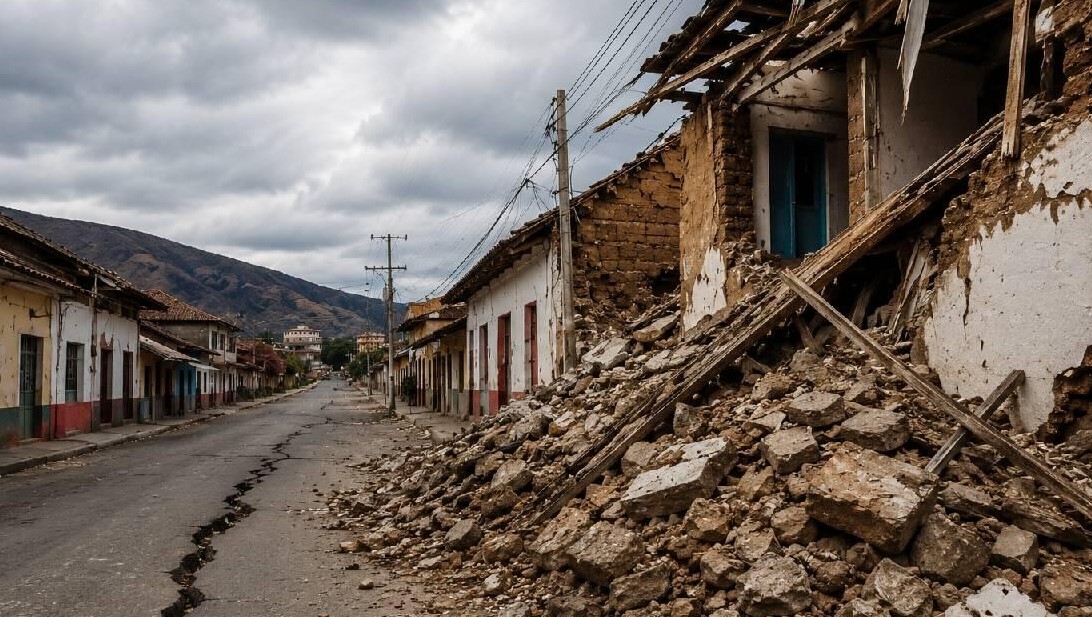
¿Qué son las réplicas de un terremoto y cuánto tiempo pueden durar?
Descubre qué son las réplicas de un terremoto, por qué se producen, cuánto tiempo pueden durar y cómo diferenciarlas de un nuevo sismo.
Leer artículo →Explora la actividad sísmica año por año y mes por mes a partir de la base histórica de Quake Pulse.
La detección de terremotos pequeños cambia con el tiempo. Las comparaciones históricas largas son más robustas con magnitudes altas.
| Magnitud | Ubicación | Profundidad | Hora | |
|---|---|---|---|---|
| M 6.9 | 34 km ENE of Calama, Chile | 109.0 km | 2026-05-25 21:52:20 UTC | Ver terremoto → |
| M 6.2 | 71 km W of Vallenar, Chile | 24.0 km | 2026-03-13 13:39:21 UTC | Ver terremoto → |
| M 6.1 | 28 km SW of Ovalle, Chile | 46.0 km | 2026-02-12 13:34:31 UTC | Ver terremoto → |
| M 6.0 | 33 km NW of Valparaíso, Chile | 25.0 km | 2026-05-31 21:34:17 UTC | Ver terremoto → |
| M 5.7 | 79 km ENE of La Tirana, Chile | 114.0 km | 2026-02-08 16:23:57 UTC | Ver terremoto → |
| M 5.5 | 124 km NW of Vallenar, Chile | 9.0 km | 2026-06-11 12:22:06 UTC | Ver terremoto → |
| M 5.5 | 19 km ENE of Cañete, Chile | 35.0 km | 2026-05-10 02:34:07 UTC | Ver terremoto → |
| M 5.4 | West Chile Rise | 10.0 km | 2026-05-18 02:10:41 UTC | Ver terremoto → |
| M 5.3 | Off the coast of Aisen, Chile | 10.0 km | 2026-03-15 08:28:36 UTC | Ver terremoto → |
| M 5.3 | 72 km W of Ollagüe, Chile | 115.1 km | 2026-01-13 07:28:22 UTC | Ver terremoto → |
| M 5.2 | West Chile Rise | 10.0 km | 2026-11-13 14:12:47 UTC | Ver terremoto → |
| M 5.2 | 62 km SW of San Antonio, Chile | 29.1 km | 2026-09-25 15:29:09 UTC | Ver terremoto → |
| M 5.2 | 167 km WNW of Mejillones, Chile | 10.0 km | 2026-09-21 11:48:28 UTC | Ver terremoto → |
| M 5.2 | 28 km NE of Villa Presidente Frei, Chile | 100.0 km | 2026-09-18 16:52:07 UTC | Ver terremoto → |
| M 5.2 | 118 km NW of Vallenar, Chile | 10.0 km | 2026-06-11 05:19:44 UTC | Ver terremoto → |
| M 5.2 | 242 km W of Puerto Chacabuco, Chile | 10.0 km | 2026-04-16 16:51:54 UTC | Ver terremoto → |
| M 5.2 | West Chile Rise | 10.0 km | 2026-01-18 16:06:32 UTC | Ver terremoto → |
| M 5.1 | 99 km WSW of Illapel, Chile | 10.0 km | 2026-11-19 18:09:46 UTC | Ver terremoto → |
| M 5.1 | 27 km WSW of Calama, Chile | 91.3 km | 2026-11-11 11:36:51 UTC | Ver terremoto → |
| M 5.1 | 93 km NNW of Coquimbo, Chile | 21.9 km | 2026-10-14 00:30:47 UTC | Ver terremoto → |
| M 5.1 | 72 km SSW of Colchane, Chile | 123.8 km | 2026-10-09 10:22:14 UTC | Ver terremoto → |
| M 5.1 | 42 km NW of Coquimbo, Chile | 55.2 km | 2026-09-03 06:04:02 UTC | Ver terremoto → |
| M 5.1 | 78 km SW of San Pedro de Atacama, Chile | 104.3 km | 2026-07-27 08:57:44 UTC | Ver terremoto → |
| M 5.1 | 52 km NNW of Valparaíso, Chile | 23.7 km | 2026-07-15 01:09:20 UTC | Ver terremoto → |
| M 5.1 | 120 km NW of Vallenar, Chile | 10.0 km | 2026-06-11 12:06:28 UTC | Ver terremoto → |
| M 5.1 | 27 km NE of Calama, Chile | 102.7 km | 2026-05-27 05:23:30 UTC | Ver terremoto → |
| M 5.1 | 43 km NNE of Calama, Chile | 107.2 km | 2026-03-01 20:03:54 UTC | Ver terremoto → |
| M 5.0 | 48 km NW of Ancud, Chile | 34.9 km | 2026-11-11 19:21:17 UTC | Ver terremoto → |
| M 5.0 | 98 km NW of Coquimbo, Chile | 10.0 km | 2026-10-14 00:36:45 UTC | Ver terremoto → |
| M 5.0 | 76 km W of Coquimbo, Chile | 11.9 km | 2026-07-31 17:47:05 UTC | Ver terremoto → |
| M 5.0 | 54 km NNW of Valparaíso, Chile | 22.0 km | 2026-07-06 16:15:52 UTC | Ver terremoto → |
| M 5.0 | 101 km NW of Coquimbo, Chile | 5.3 km | 2026-07-05 15:53:33 UTC | Ver terremoto → |
| M 5.0 | 39 km SSW of Ovalle, Chile | 51.8 km | 2026-07-04 03:09:33 UTC | Ver terremoto → |
| M 5.0 | West Chile Rise | 10.0 km | 2026-02-14 18:25:49 UTC | Ver terremoto → |
| M 5.0 | 38 km N of Barrio Industrial, Chile | 73.9 km | 2026-01-16 02:13:22 UTC | Ver terremoto → |
| M 4.9 | West Chile Rise | 10.0 km | 2026-11-18 11:10:57 UTC | Ver terremoto → |
| M 4.9 | 16 km WSW of La Tirana, Chile | 44.9 km | 2026-10-14 03:11:09 UTC | Ver terremoto → |
| M 4.9 | 235 km W of Puerto Chacabuco, Chile | 10.0 km | 2026-09-11 22:32:23 UTC | Ver terremoto → |
| M 4.9 | 120 km NW of Vallenar, Chile | 10.0 km | 2026-07-22 09:34:22 UTC | Ver terremoto → |
| M 4.9 | 46 km NNW of Valparaíso, Chile | 26.3 km | 2026-07-06 16:18:10 UTC | Ver terremoto → |
| M 4.9 | 47 km NW of Valparaíso, Chile | 10.0 km | 2026-05-31 21:46:54 UTC | Ver terremoto → |
| M 4.9 | 83 km WNW of Puerto, Chile | 16.4 km | 2026-03-23 22:52:17 UTC | Ver terremoto → |
| M 4.9 | 76 km E of Arica, Chile | 109.3 km | 2026-03-09 15:41:41 UTC | Ver terremoto → |
| M 4.9 | 75 km SSW of Ollagüe, Chile | 110.2 km | 2026-02-26 09:07:45 UTC | Ver terremoto → |
| M 4.9 | 35 km WSW of Ovalle, Chile | 49.5 km | 2026-02-22 14:22:57 UTC | Ver terremoto → |
| M 4.9 | West Chile Rise | 10.0 km | 2026-01-16 21:04:58 UTC | Ver terremoto → |
| M 4.9 | Off the coast of Aisen, Chile | 10.0 km | 2026-01-04 00:00:50 UTC | Ver terremoto → |
| M 4.8 | 71 km W of Vallenar, Chile | 33.4 km | 2026-11-24 13:22:38 UTC | Ver terremoto → |
| M 4.8 | West Chile Rise | 10.0 km | 2026-11-14 06:33:19 UTC | Ver terremoto → |
| M 4.8 | 23 km SW of San Antonio, Chile | 33.6 km | 2026-10-12 18:17:18 UTC | Ver terremoto → |
| M 4.8 | 33 km NE of Calama, Chile | 115.5 km | 2026-09-06 10:39:32 UTC | Ver terremoto → |
| M 4.8 | 29 km WSW of Salamanca, Chile | 81.9 km | 2026-09-03 21:18:21 UTC | Ver terremoto → |
| M 4.8 | 29 km WSW of Santa Cruz, Chile | 48.1 km | 2026-07-28 05:38:43 UTC | Ver terremoto → |
| M 4.8 | 53 km SSW of San Pedro de Atacama, Chile | 111.5 km | 2026-07-22 17:34:37 UTC | Ver terremoto → |
| M 4.8 | 27 km S of Coquimbo, Chile | 64.5 km | 2026-07-16 10:38:08 UTC | Ver terremoto → |
| M 4.8 | 95 km NW of Coquimbo, Chile | 24.8 km | 2026-07-05 14:42:06 UTC | Ver terremoto → |
| M 4.8 | 32 km NNW of Valparaíso, Chile | 23.7 km | 2026-05-31 21:52:11 UTC | Ver terremoto → |
| M 4.8 | 175 km W of Puerto Natales, Chile | 47.6 km | 2026-04-15 02:38:27 UTC | Ver terremoto → |
| M 4.8 | 40 km E of Palca, Peru | 138.6 km | 2026-03-22 08:02:54 UTC | Ver terremoto → |
| M 4.8 | 87 km WNW of Puerto, Chile | 16.4 km | 2026-03-20 20:06:54 UTC | Ver terremoto → |
La detección de terremotos pequeños cambia con el tiempo. Las comparaciones históricas largas son más robustas con magnitudes altas.
Guías, análisis y contenidos prácticos para ir más allá de los datos en vivo.
Descubre qué son las réplicas de un terremoto, por qué se producen, cuánto tiempo pueden durar y cómo diferenciarlas de un nuevo sismo.
Leer artículo →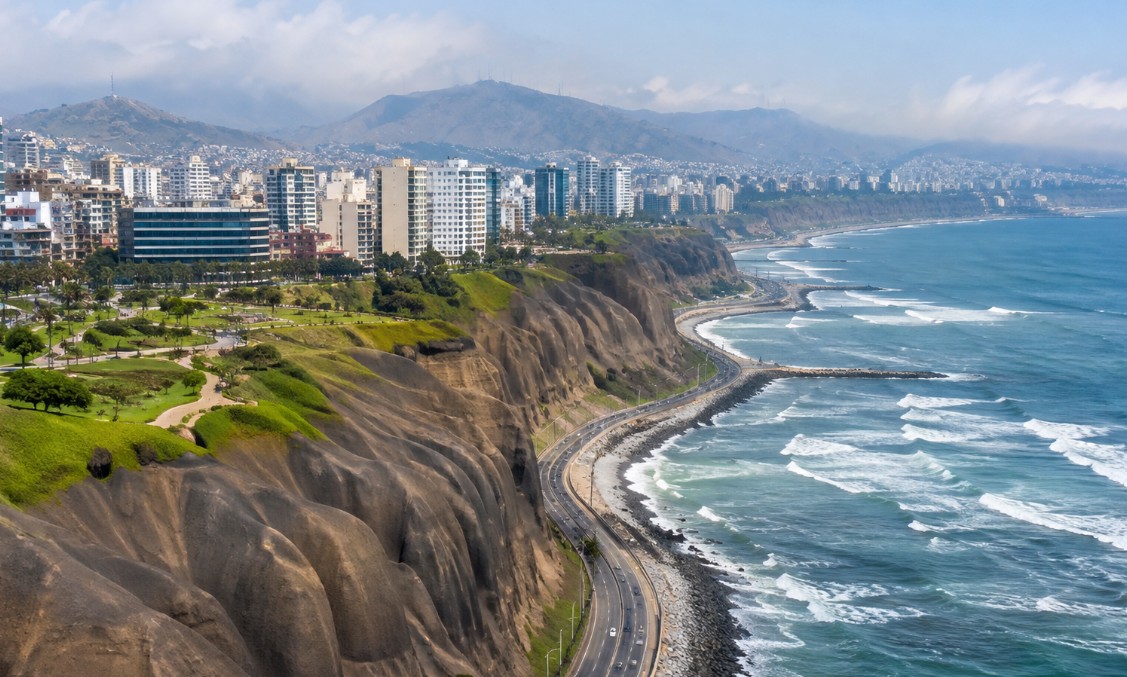
Descubre por qué hay tantos terremotos en Perú, cuáles son las zonas sísmicas más activas y qué grandes sismos han marcado la historia del país
Leer artículo →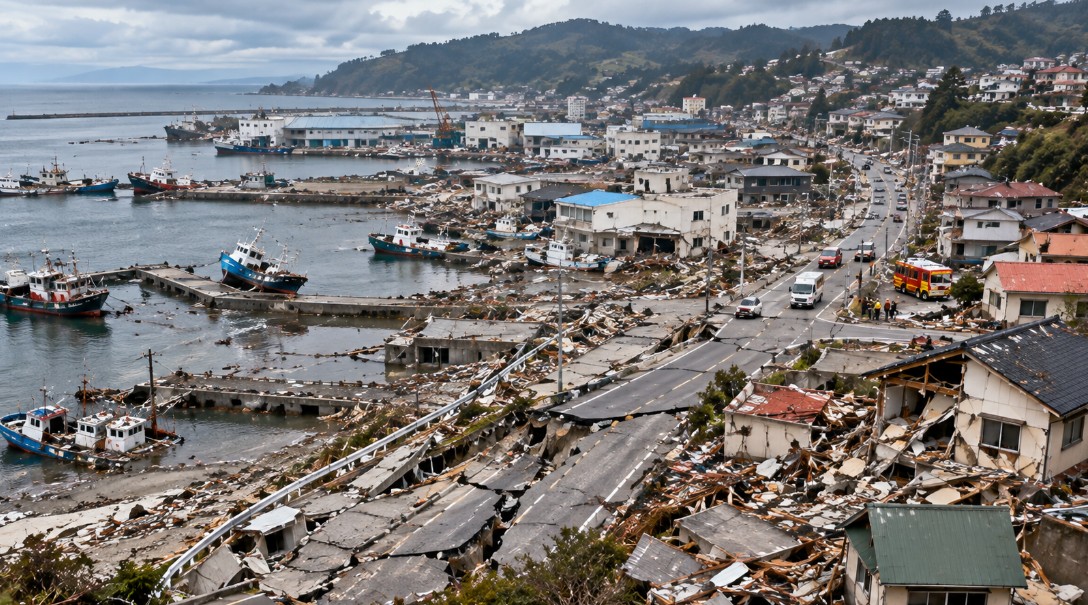
¿Por qué Chile registra algunos de los terremotos más potentes del planeta? Descubre cómo la subducción de la placa de Nazca bajo Sudamérica provoca movimientos sísmicos gigantescos. Repasamos los terremotos de Valdivia, Maule e Illapel, sus consecuencias y las medidas de prevención que ayudan a proteger a la población chilena.
Leer artículo →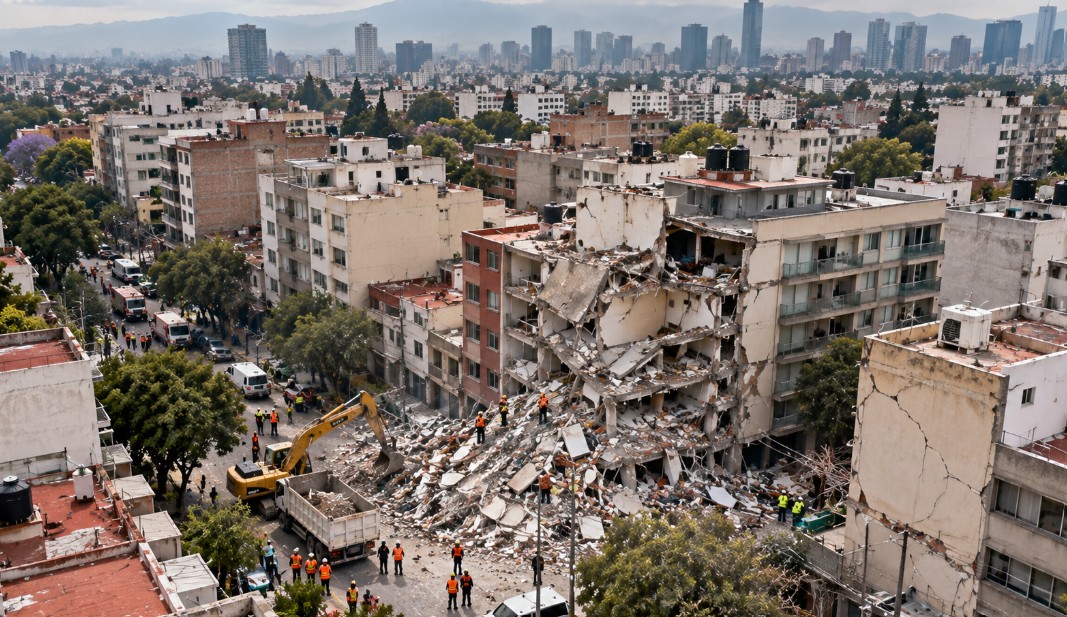
¿Por qué los terremotos se sienten tan intensamente en Ciudad de México? Descubre cómo los sedimentos del antiguo lago de Texcoco amplifican las ondas sísmicas, qué ocurrió durante los devastadores terremotos de 1985 y 2017 y cómo funcionan los sistemas de vigilancia y alerta sísmica en la capital mexicana.
Leer artículo →
La magnitud es solo una parte de la historia. Profundidad, distancia, tipo de suelo y vulnerabilidad de los edificios cambian la experiencia real del terremoto.
Leer artículo →
El diseño sismorresistente no busca que un edificio permanezca inmóvil, sino controlar fuerzas, deformaciones y modos de fallo para proteger mejor a las personas.
Leer artículo →