


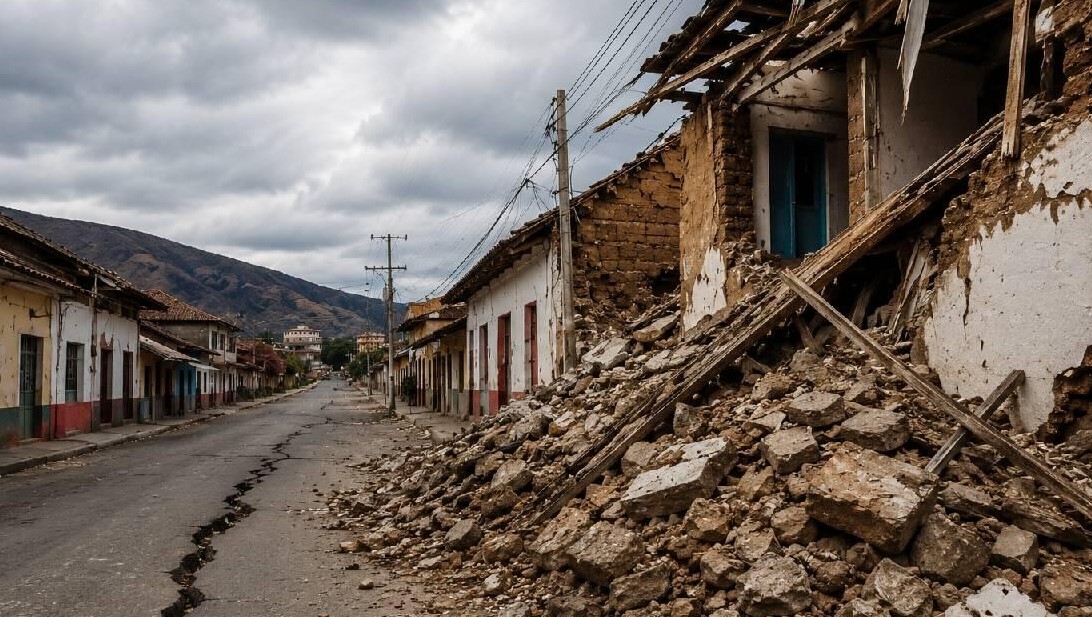
¿Qué son las réplicas de un terremoto y cuánto tiempo pueden durar?
Descubre qué son las réplicas de un terremoto, por qué se producen, cuánto tiempo pueden durar y cómo diferenciarlas de un nuevo sismo.
Leer artículo →Explora la actividad sísmica año por año y mes por mes a partir de la base histórica de Quake Pulse.
La detección de terremotos pequeños cambia con el tiempo. Las comparaciones históricas largas son más robustas con magnitudes altas.
| Magnitud | Ubicación | Profundidad | Hora | |
|---|---|---|---|---|
| M 7.0 | 191 km ENE of Nagqu, China | 18.0 km | 2026-10-22 14:33:40 UTC | Ver terremoto → |
| M 6.3 | 262 km SSE of Dunhuang, China | 10.0 km | 2026-06-16 09:06:55 UTC | Ver terremoto → |
| M 5.9 | 238 km SW of Yanglong, China | 10.0 km | 2026-11-21 10:45:33 UTC | Ver terremoto → |
| M 5.9 | 218 km ENE of Nagqu, China | 7.0 km | 2026-10-25 11:25:57 UTC | Ver terremoto → |
| M 5.8 | 194 km NW of Oula Xiuma, China | 10.0 km | 2026-07-28 03:34:05 UTC | Ver terremoto → |
| M 5.7 | 199 km NW of Oula Xiuma, China | 10.0 km | 2026-07-28 03:16:08 UTC | Ver terremoto → |
| M 5.5 | 269 km SSE of Dunhuang, China | 6.0 km | 2026-08-18 21:36:27 UTC | Ver terremoto → |
| M 5.5 | 9 km SE of Dianga, China | 10.0 km | 2026-01-26 06:56:02 UTC | Ver terremoto → |
| M 5.4 | 210 km ENE of Nagqu, China | 10.0 km | 2026-10-27 18:57:53 UTC | Ver terremoto → |
| M 5.4 | 21 km WNW of Jiangyou, China | 10.0 km | 2026-09-03 11:39:41 UTC | Ver terremoto → |
| M 5.4 | 272 km S of Dunhuang, China | 10.0 km | 2026-06-16 09:45:26 UTC | Ver terremoto → |
| M 5.3 | 223 km ENE of Nagqu, China | 10.0 km | 2026-10-24 08:39:53 UTC | Ver terremoto → |
| M 5.3 | 272 km SSE of Dunhuang, China | 10.0 km | 2026-06-30 23:44:54 UTC | Ver terremoto → |
| M 5.2 | 79 km NE of Kuqa, China | 10.0 km | 2026-11-13 16:17:51 UTC | Ver terremoto → |
| M 5.2 | 201 km ENE of Nagqu, China | 10.0 km | 2026-10-22 15:12:04 UTC | Ver terremoto → |
| M 5.2 | 271 km SSE of Dunhuang, China | 10.0 km | 2026-09-03 17:04:40 UTC | Ver terremoto → |
| M 5.2 | 270 km SSE of Dunhuang, China | 10.0 km | 2026-08-20 09:49:47 UTC | Ver terremoto → |
| M 5.2 | 59 km NE of Simao, China | 10.0 km | 2026-07-21 11:43:07 UTC | Ver terremoto → |
| M 5.2 | 13 km WNW of Changning, China | 10.0 km | 2026-06-28 16:12:09 UTC | Ver terremoto → |
| M 5.2 | 263 km SSE of Dunhuang, China | 13.9 km | 2026-06-23 15:29:03 UTC | Ver terremoto → |
| M 5.2 | 263 km WSW of Yanglong, China | 10.0 km | 2026-06-17 14:20:04 UTC | Ver terremoto → |
| M 5.2 | 118 km SW of Turpan, China | 10.0 km | 2026-05-29 06:55:52 UTC | Ver terremoto → |
| M 5.2 | 67 km SSE of Shihezi, China | 10.0 km | 2026-03-06 21:44:46 UTC | Ver terremoto → |
| M 5.2 | 34 km WSW of Zhaotong, China | 10.0 km | 2026-01-19 11:32:06 UTC | Ver terremoto → |
| M 5.1 | 45 km SE of Ürümqi, China | 10.0 km | 2026-11-22 09:08:28 UTC | Ver terremoto → |
| M 5.1 | 199 km ENE of Nagqu, China | 10.0 km | 2026-10-25 11:24:14 UTC | Ver terremoto → |
| M 5.1 | 263 km WSW of Yanglong, China | 10.0 km | 2026-10-20 06:41:23 UTC | Ver terremoto → |
| M 5.1 | 115 km NE of Joshīmath, India | 10.0 km | 2026-09-03 08:16:36 UTC | Ver terremoto → |
| M 5.1 | 3 km ESE of Xunchang, China | 10.0 km | 2026-08-07 05:08:30 UTC | Ver terremoto → |
| M 5.1 | 191 km NW of Oula Xiuma, China | 10.0 km | 2026-07-28 08:04:09 UTC | Ver terremoto → |
| M 5.1 | 247 km SSE of Dunhuang, China | 10.0 km | 2026-06-16 09:42:35 UTC | Ver terremoto → |
| M 5.1 | 20 km NW of Liuzhou, China | 10.0 km | 2026-05-18 13:44:26 UTC | Ver terremoto → |
| M 5.1 | 117 km SW of Turpan, China | 10.0 km | 2026-05-03 10:00:34 UTC | Ver terremoto → |
| M 5.1 | 65 km SSE of Ürümqi, China | 10.0 km | 2026-04-02 07:39:11 UTC | Ver terremoto → |
| M 5.0 | 130 km NE of Thang, India | 76.9 km | 2026-11-05 16:56:25 UTC | Ver terremoto → |
| M 5.0 | 207 km ENE of Nagqu, China | 10.0 km | 2026-10-22 18:06:44 UTC | Ver terremoto → |
| M 5.0 | 31 km NW of Jiangyou, China | 10.0 km | 2026-10-19 10:57:08 UTC | Ver terremoto → |
| M 5.0 | 191 km NW of Oula Xiuma, China | 10.0 km | 2026-09-27 16:43:10 UTC | Ver terremoto → |
| M 5.0 | 15 km NNW of Xunchang, China | 10.0 km | 2026-09-25 23:57:33 UTC | Ver terremoto → |
| M 5.0 | 13 km N of Xunchang, China | 10.0 km | 2026-09-25 21:01:27 UTC | Ver terremoto → |
| M 5.0 | 281 km SSE of Dunhuang, China | 10.5 km | 2026-09-16 05:52:03 UTC | Ver terremoto → |
| M 5.0 | 19 km NW of Fuji, China | 10.0 km | 2026-08-28 05:13:35 UTC | Ver terremoto → |
| M 5.0 | western Xizang | 10.0 km | 2026-08-27 14:45:48 UTC | Ver terremoto → |
| M 5.0 | 8 km NNE of Xunchang, China | 10.0 km | 2026-08-02 18:21:45 UTC | Ver terremoto → |
| M 5.0 | 14 km N of Xunchang, China | 10.0 km | 2026-07-08 23:44:14 UTC | Ver terremoto → |
| M 5.0 | 13 km NNE of Xunchang, China | 10.0 km | 2026-07-08 02:08:48 UTC | Ver terremoto → |
| M 5.0 | 13 km N of Xunchang, China | 10.0 km | 2026-07-07 22:12:29 UTC | Ver terremoto → |
| M 5.0 | 30 km NNW of Mianzhu, Deyang, Sichuan, China | 10.0 km | 2026-07-05 15:30:13 UTC | Ver terremoto → |
| M 5.0 | 262 km SSE of Dunhuang, China | 10.0 km | 2026-06-16 11:14:17 UTC | Ver terremoto → |
| M 5.0 | 20 km NW of Liuzhou, China | 10.0 km | 2026-05-17 16:21:06 UTC | Ver terremoto → |
| M 5.0 | 73 km SSE of Shihezi, China | 10.0 km | 2026-03-05 00:15:42 UTC | Ver terremoto → |
| M 5.0 | 114 km NNE of Aksu, China | 10.0 km | 2026-02-19 09:09:14 UTC | Ver terremoto → |
| M 5.0 | 288 km S of Dunhuang, China | 10.0 km | 2026-01-14 23:18:18 UTC | Ver terremoto → |
| M 5.0 | 116 km WSW of Baluntaicun, China | 10.0 km | 2026-01-04 08:30:06 UTC | Ver terremoto → |
| M 4.9 | 39 km NW of Kuqa, China | 10.0 km | 2026-11-23 02:14:59 UTC | Ver terremoto → |
| M 4.9 | 13 km WNW of Xichang, China | 10.0 km | 2026-11-19 18:41:19 UTC | Ver terremoto → |
| M 4.9 | 41 km N of Weining, China | 10.0 km | 2026-11-12 20:03:14 UTC | Ver terremoto → |
| M 4.9 | 41 km SSE of Kax, China | 10.0 km | 2026-10-24 08:29:20 UTC | Ver terremoto → |
| M 4.9 | 209 km ENE of Nagqu, China | 10.0 km | 2026-10-24 00:07:56 UTC | Ver terremoto → |
| M 4.9 | 210 km ENE of Nagqu, China | 10.0 km | 2026-10-22 16:21:33 UTC | Ver terremoto → |
La detección de terremotos pequeños cambia con el tiempo. Las comparaciones históricas largas son más robustas con magnitudes altas.
Guías, análisis y contenidos prácticos para ir más allá de los datos en vivo.
Descubre qué son las réplicas de un terremoto, por qué se producen, cuánto tiempo pueden durar y cómo diferenciarlas de un nuevo sismo.
Leer artículo →
Descubre por qué hay tantos terremotos en Perú, cuáles son las zonas sísmicas más activas y qué grandes sismos han marcado la historia del país
Leer artículo →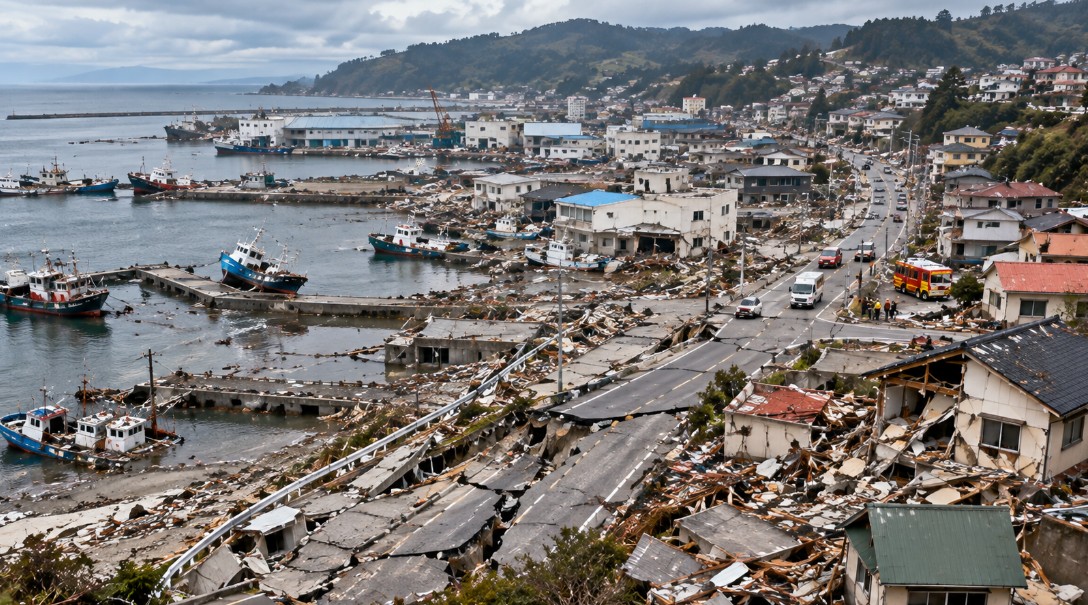
¿Por qué Chile registra algunos de los terremotos más potentes del planeta? Descubre cómo la subducción de la placa de Nazca bajo Sudamérica provoca movimientos sísmicos gigantescos. Repasamos los terremotos de Valdivia, Maule e Illapel, sus consecuencias y las medidas de prevención que ayudan a proteger a la población chilena.
Leer artículo →
¿Por qué los terremotos se sienten tan intensamente en Ciudad de México? Descubre cómo los sedimentos del antiguo lago de Texcoco amplifican las ondas sísmicas, qué ocurrió durante los devastadores terremotos de 1985 y 2017 y cómo funcionan los sistemas de vigilancia y alerta sísmica en la capital mexicana.
Leer artículo →
La magnitud es solo una parte de la historia. Profundidad, distancia, tipo de suelo y vulnerabilidad de los edificios cambian la experiencia real del terremoto.
Leer artículo →
El diseño sismorresistente no busca que un edificio permanezca inmóvil, sino controlar fuerzas, deformaciones y modos de fallo para proteger mejor a las personas.
Leer artículo →